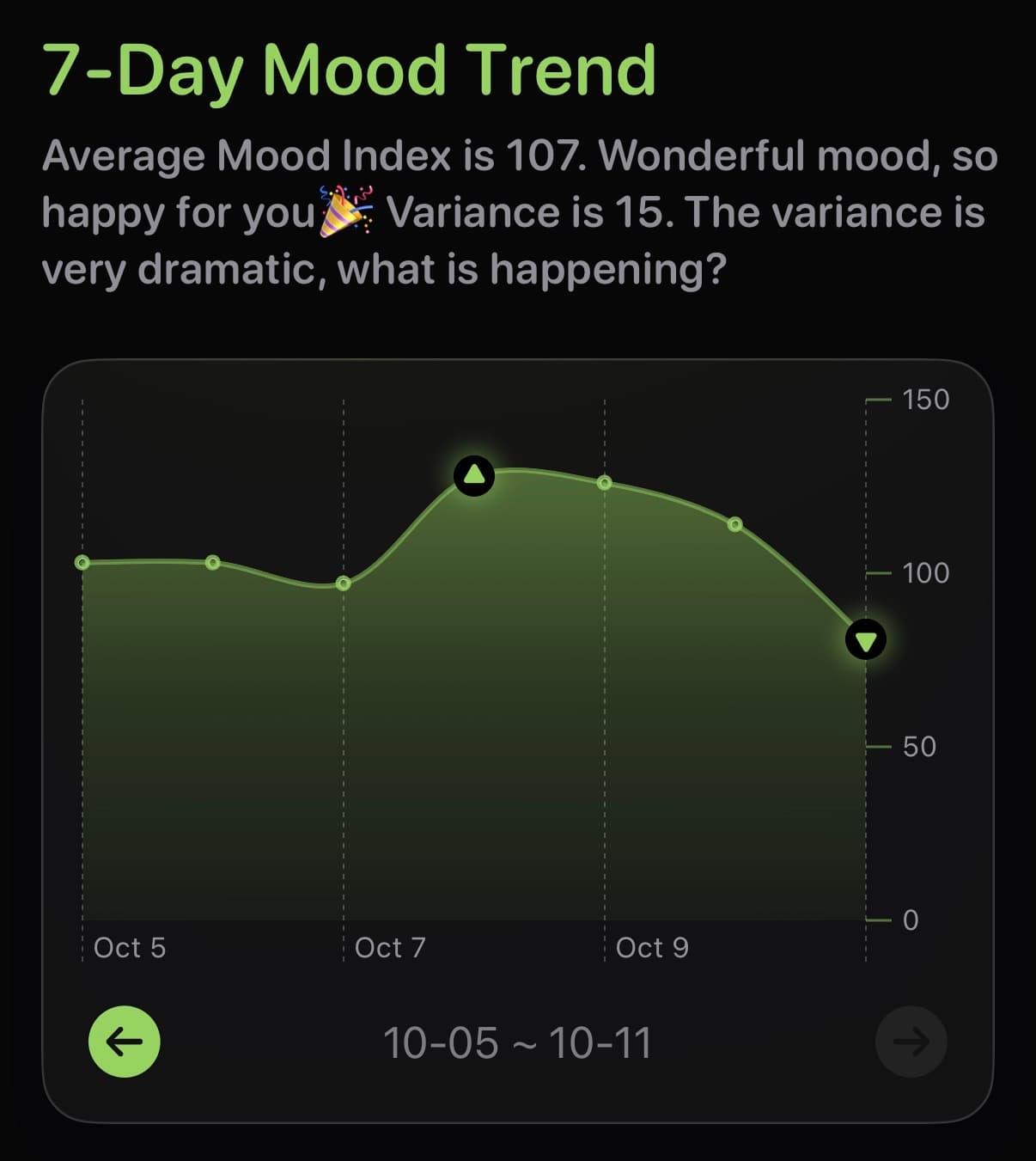
Mood tracking gives you numbers. Mood journaling gives you context. The best results come from combining both, so you can see not just how you felt, but why.
Quick answer
If you only log a mood score, you see ups and downs without meaning. If you only journal, you miss trends. Use a simple blend: mood score + one sentence of context.
The difference in one sentence
- Mood tracking: "I felt 4/10 today."
- Mood journaling: "I felt 4/10 because the meeting went badly and I skipped lunch."
What to track for real insights
- Mood score: A quick 1-10 number.
- Energy: Low, medium, high.
- Trigger: One event that influenced your mood.
- Body signal: Headache, tight chest, restlessness.
- One sentence: A short note that adds context.
A daily 2-minute template
Mood: ___ /10. Energy: low/medium/high. Trigger: _____. Body: _____. Note: "_____."
Weekly review in 5 minutes
- Circle your three lowest moods.
- Look for shared triggers or times of day.
- Pick one change to test next week.
Common mistakes
- Only logging bad days: You need contrast to see patterns.
- Over-tagging: Too many labels makes the data noisy.
- No review time: Patterns appear in weekly lookbacks.
How Lifelight combines both
Lifelight connects mood scores to your journal entries, so patterns become obvious. It also prompts you for context when you log a mood, which makes your data actually useful.
If you want a simple way to track moods with context, start with the Lifelight AI journal app or download the app.